Healthy Baking

With the success of the Great British Bake-Off, a huge rekindling of baking skills is happening.  I come from families of cake bakers on both sides. My grandmother’s shortbread was absolutely delicious and we ate at least 2 or 3 different cakes for tea each day!   However for health-concious and weight-concious people, eating cakes is not usually on their agenda and eating sugary cakes is a fast route to blood sugar problems, diabetes and heart disease. But there are such things as healthy cakes!  Eggs, wholemeal flour and even butter have healthy properties with good levels of vitamins and minerals. If you replace the sugar with dried fruit and/or bananas, cakes can have good antioxidant levels too.  Adding in nuts adds more protein and flavour. Here is a good basic cake made without sugar – and very easily made too!

Basic Healthy Sponge Cake

Ingredients

8 oz dates

6 oz butter or equivalent of oil such as groundnut oil or light olive oil or coconut oil.

4 oz ground almonds

2 or 3 mashed bananas

2 eggs

6 oz wholemeal flour or wheat free flour

1 teaspoon baking powder

Method

Cook the dates in a small saucepan with sufficient water to cover them. Simmer gently, do not boil or they will burn. When cooked and mushy, add the butter/oil and mix well. Mash in the bananas using a potato masher. Allow to cool slightly.

Add the almonds and the beaten eggs. Mix well.

Add the flour and baking powder and mix briefly and gently.

Turn the mixture out into a loaf tin or cake tin which has been greased and lined. Cook in a moderate oven, gas mark 3 or 4 for about 40 minutes or until done.

Easy and delicious!
Posted in Nutrition | Tagged , , , | Leave a comment

Musing on Beauty

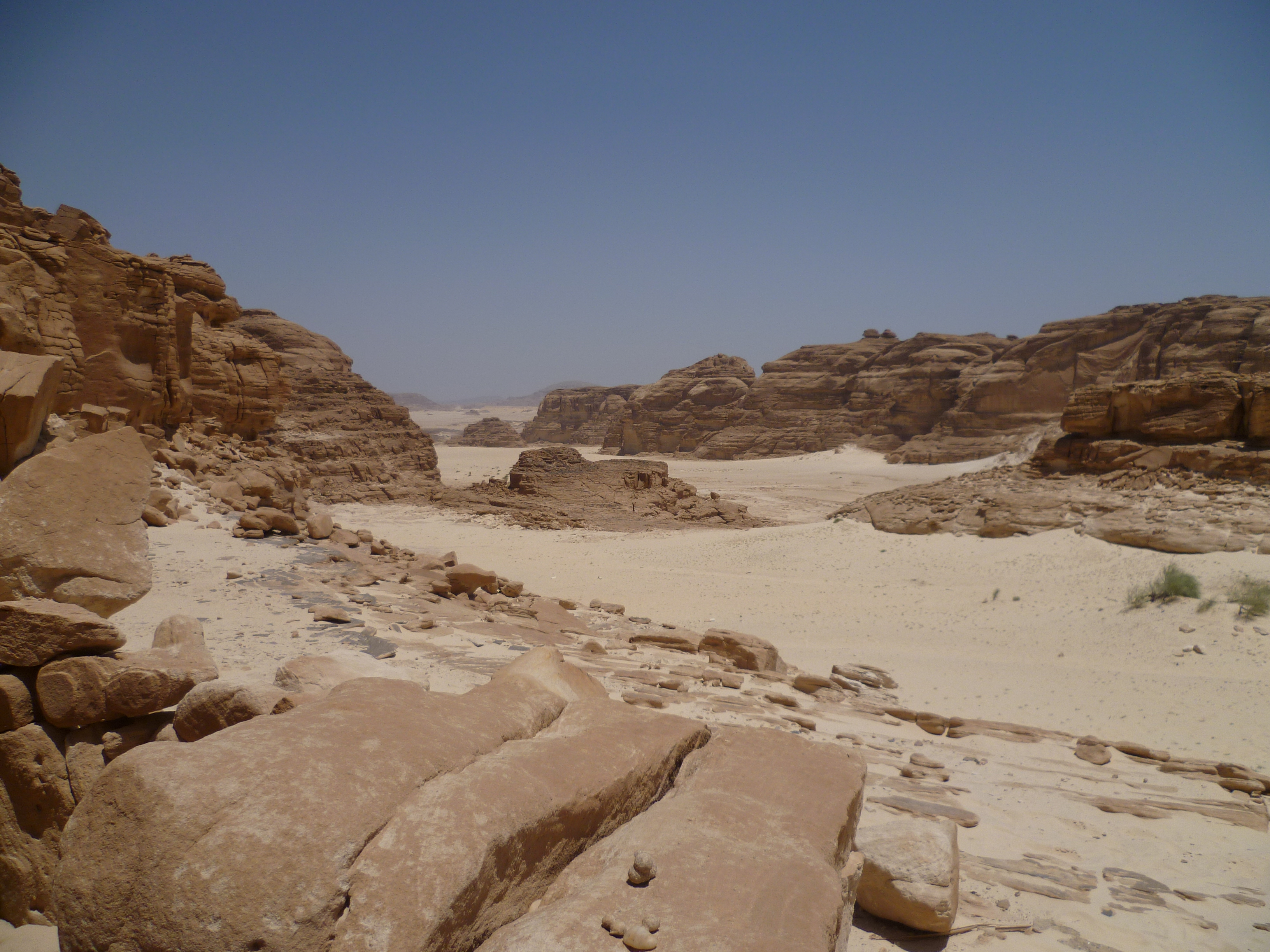
When I was in the Sinai desert a few weeks ago there was plenty of time for reflection.  Here are some of my thoughts written as part poem, part prose.

P1010893

Beauty

Why is there beauty in the world?P1000842

What is beauty and what is beauty for?

How to describe what beauty is

except in poems and prose that evoke

an appreciation of beauty.

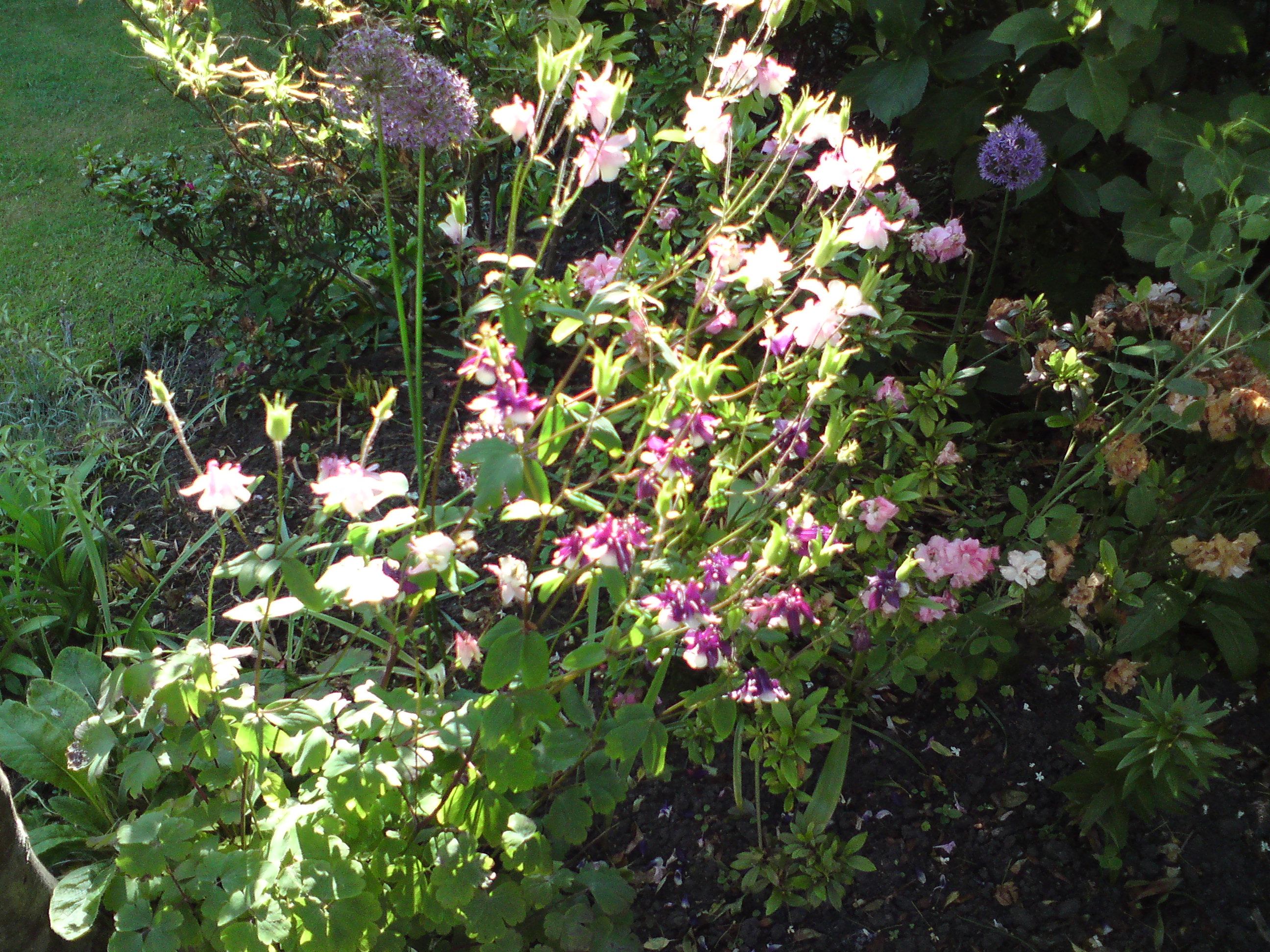
Beauty is in flowers, coloured rocks,P1000020

Smiling faces, loving eyes.

Beauty exists for us when fear falls away,

Because fear blocks by opening our minds

And shutting our hearts.

We feel beauty in our hearts, our eyes, our ears,

Our bodies, it comes in the impulse to hug someoneP1010865

Or to caress a smooth wooden bowl,

Or the sound of someone singing,

Or a meadow of wild flowers.

They say that beauty is in the eye of the beholder

But beauty is always present in the world.

Appreciating beauty depends on the receiver. P1010909

Once we let go of fear, beauty is everywhere.

And when we see beauty we are more connected to spirit/god.

Seeing beauty lets spirit into our hearts

And hearing beauty and feeling beauty,

And touching beauty and tasting beauty…

I love the caresses of the sun and breeze on my skin.

I love the feel of smooth rock beneath my feetP1020319

I love the blue azure sky, especially when it dances with sparkly stars.

I love the cool soft, silky and sensuous early morning desert sand

As I pour it over my naked body.

I love the empty silence, full of energy and expectation

That reflects back to me my every sound tenfold.

I love all this beauty.

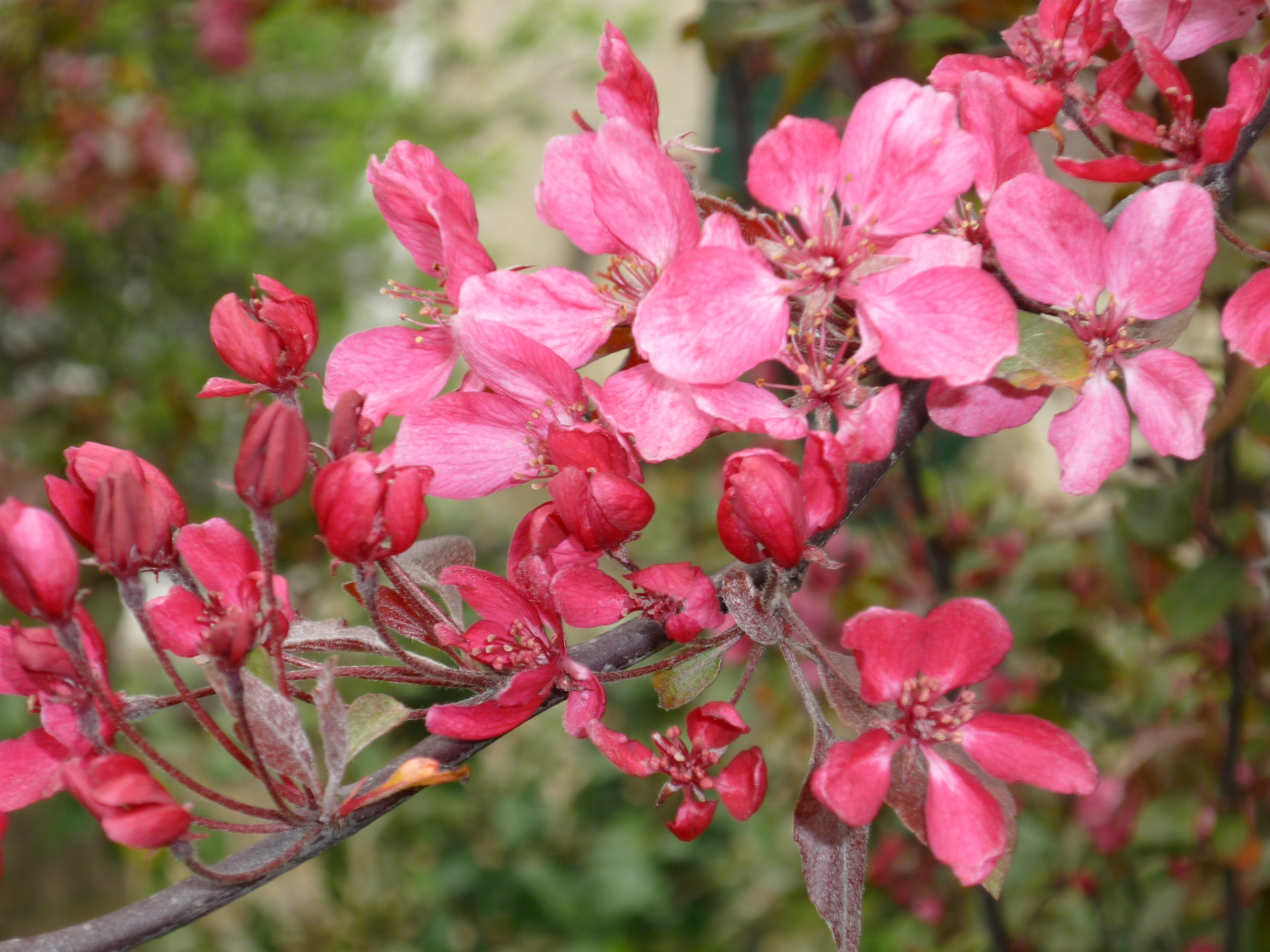
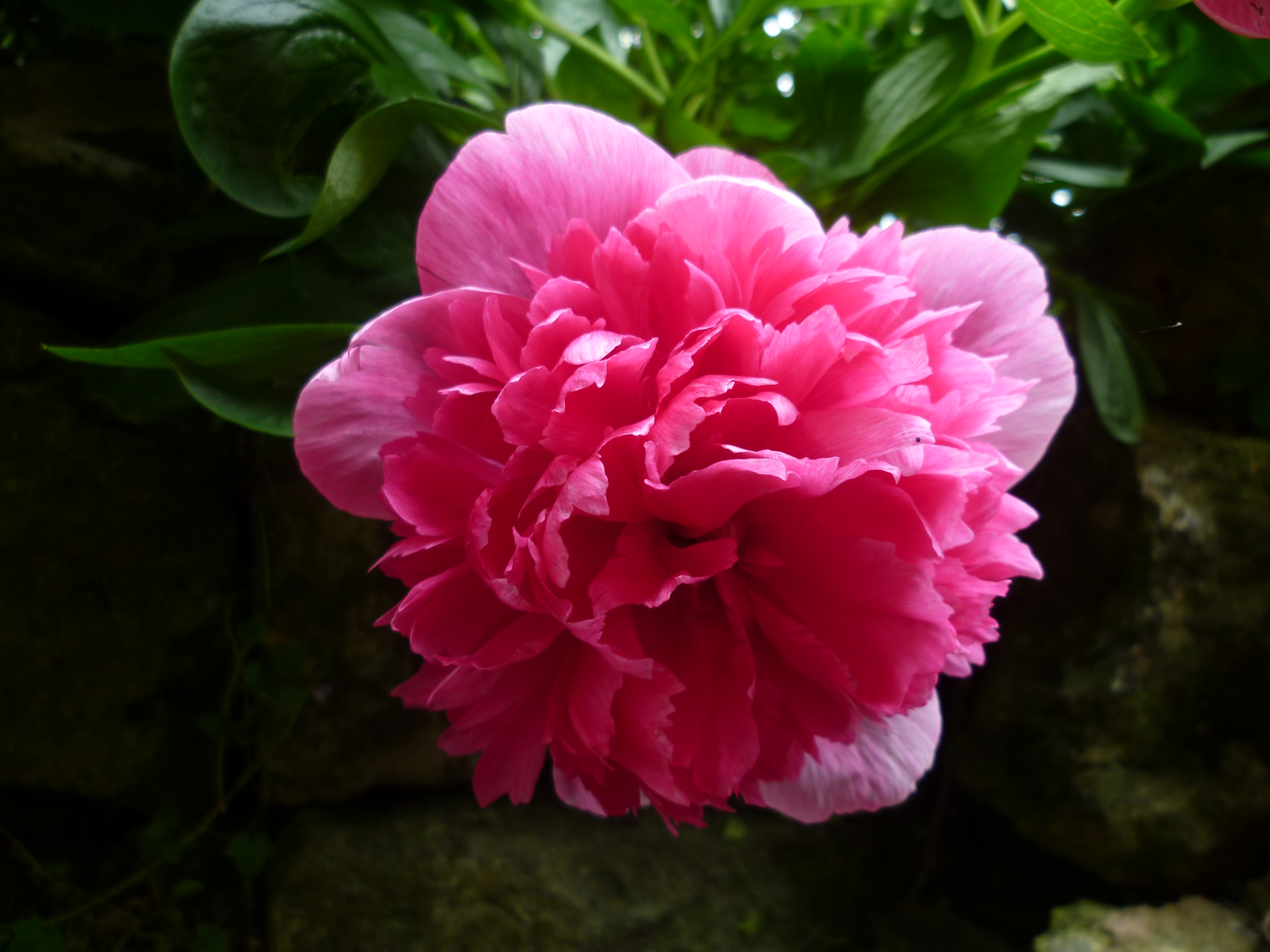
When I see a peony flower,

it is full of radiant colour,P1020350

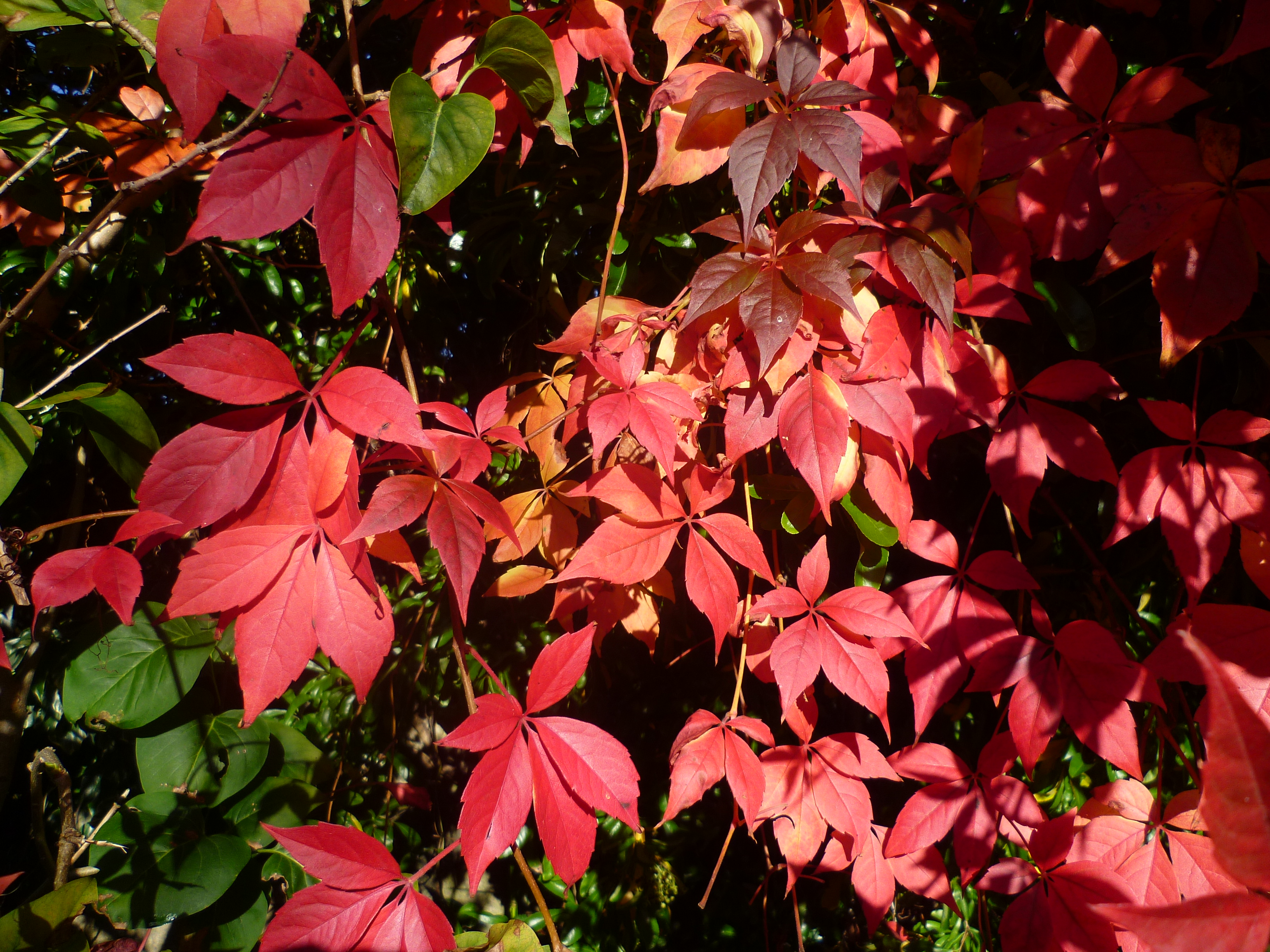
a cerise nest of crimson leaves,

Stunning in its beauty.

And what of rainbow coloured topical birds

And lizards with bright turquoise heads.

Why, if nature is practical, functional and self-interested (if it is),

Does it make such DSC00004monumentally beautiful, bountiful, statements?

Nature bursts with life, exuberance, blousy extravagance – with beauty.

Surely this beauty cannot be explained as the result of a process of evolution and natural selection.

It feels above all that.

Is it spirit’s/god/dess’s present to the world?

When we live in the world, in the present,

We feels god’s present of beauty in our hearts.

P1020316

Posted in General | Tagged , , | Leave a comment

The moral dilemmas of travel

Many people would agree that there is an innate desire for human beings to put themselves in new, exciting, sometimes dangerous situations and places.  The urge to travel, to see and experience new people and landscapes is perhaps fuelled by a curiosity to see what is over the next fence, ridge or mountain.  Lots of people have the feeling of itchy feet and want to travel to ‘broaden the mind’ and maybe to find somewhere better to live.  There are others who just want to escape from their hum drum lives, from stress and go somewhere, anywhere, to chill out.

Now that nearly everyone in the developed world can afford to travel and go on holiday we see the effects this urge has on the planet as a whole.  Most notably the estimated effects of air travel on greenhouses gases and global warming.  Research suggests these effects are a huge driver to global warming and that we should be reducing air travel to absolutely essential journeys.  There can be little justification for flying hundreds of miles to sit in the sun by a swimming pool!  There are alternative ways of travelling such as by train, by coach and by boat (all much more climate friendly) and it is far easier to do in this Internet age and with the help of man-in-seat 61.  This way of travelling is slower, more expensive and somewhat limiting in where you can travel to.  The world of people seems to be mirroring the volatility of the climate as unrest spreads to many countries.  This makes travel overland to some countries very difficult if not impossible.

If the question of travel were simply about whether we, as responsible citizens of Earth, should fly the answer would of course be ‘no’.  However travelling does not just have its effects on the traveller and the climate.  The host countries are hugely affected by

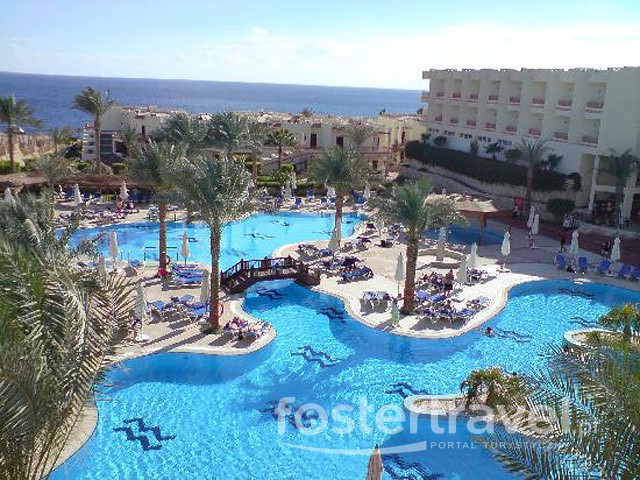
Mass tourism hotel

Mass tourism hotel

tourism.  Often the tourism business creates a large number of very low wage jobs for local people, depletes local resources and the environment, increases the strain on local infrastructure and makes a great deal of money for multi-national corporations who are based outside the country.  This sort of tourism can bring lots of money into government coffers but leave local people in a poverty trap where the only work available is low paid.  This type of tourism is mass tourism and its main beneficiaries are shareholders of big companies.  Even the tourists themselves don’t have the experiences they were led to expect.  Often the standards of accommodation are below expectation, the food can be unimaginative mass catering, and they pay a lot for a mediocre experience.  While many people put up with this and believe the adverts about their holidays, they are missing out on a great deal.

Counter to this, there is a new sort of tourism called sustainable tourism or alex-6426responsible travel.  This is tourism for those with itchy feet, a desire to see more of the world, experience the rich cultures the world has to offer and to meet people in different countries.  For the inhabitants of responsible tourism destinations, there can be much greater benefits as money spent by tourists goes straight into the local economy through tourists staying in small locally owned hotels, using local taxi drivers, and eating in local restaurants.  Sustainable tourism is especially important in areas where there is little alternative employment and can be the most important source of income.

In the case of the Jebeliya Bedouin of south Sinai, Egypt, most gain an income either directly or indirectly from tourism.  Bedouin are usually barred from working in hotels but find work offering ‘an authentic Bedouin experience’.  As most of the tourism areas are on the coast this usually involves moving away from their homelands, to where they earn little but enough to afford some basic healthcare and schooling for their children.  Low-key sustainable tourism though, could and does bring in much greater rewards pound for pound.  These rewards are being able to live in their ancestral homes in the mountains, living traditional lifestyles and keeping their culture alive.  Strange as it may sound, without any alternative industry, these Bedouin need tourism to be able to live in a traditional way.  And traditional knowledge may become more important as climate change gathers pace as there is wisdom in how to live in challenging environments, the value of having a sense of place and connection, and the ability to adapt.

However the cost in environmental terms is high.  It is now extremely difficult to get to Egypt except by air.  The overland route via Syria is no longer passable.  The ferry from Italy to Alexandria has been suspended for the time being as it goes via Syria.  Travelling along the north coast of Africa via Libya is not really an option either.  So unless tourists fly there can be no tourism in South Sinai and little or no work for the Bedouin and therefore little or no money for health care or schools, or even to buy the now expensive food.  The mountain Bedouin can’t grow food easily because they don’t have much water due to a protracted drought and a falling water table.  Deserts aren’t great for food production except for grazing, so they have to buy food, so they need money, so they need work.  In the old days they made a living by keeping goats and camels that they herded over the deserts and mountains from one rain fed area to another.  Now there isn’t enough rain for grazing animals to raise enough stock to sell. There’s not much industry in South Sinai either.  They need the income from tourists to survive.  But more than this, they need tourists coming to the mountains to enable them to live in their ancestral homes, and to keep their culture alive.  Here there is a symbiosis between the indigenous population and the conscious tourist.

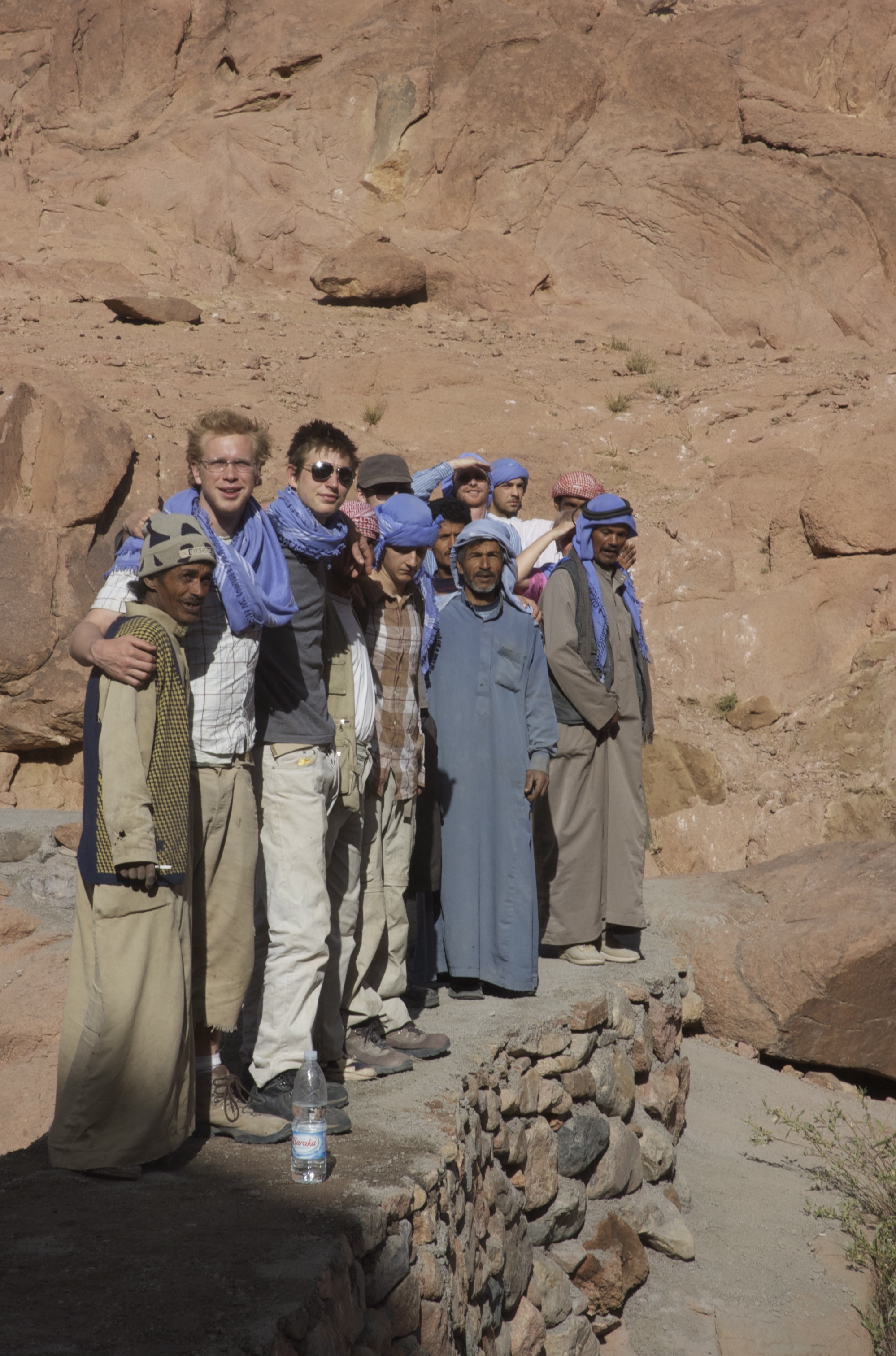
The Makhad Trust has been supporting the Jebilya Bedouin in mountains around St Katherine’s for about 10 years through a series of water projects.  Where the water table has dropped below the bottom of wells, funds have been made available for garden owners to employ a skilled man to deepen the well to the new water table level.  The Trust has also been taking out working parties to work alongside the Bedouin in the construction of small dams in side wadis above the Bedouin gardens.  These dams trap rainwater when it occasionally rains, and hold it back long enough to permeate the soil into the water table.  The Bedouin reckon that water in a dam lasts 3 months with an additional benefit to the water table after the dam is dry of several more weeks.  The dam water and deepened wells have enabled some Bedouin to restore their centuries old mountain gardens, most of which had fallen into disuse due to the shortage of water.  The orchard gardens grow apples, pears, peaches, pomegranates, quince, almonds, dates, walnuts, grapes and vegetables.  The gardens provide food and a source of income when the Bedouin sell the surplus.

Local Transport

Local Transport

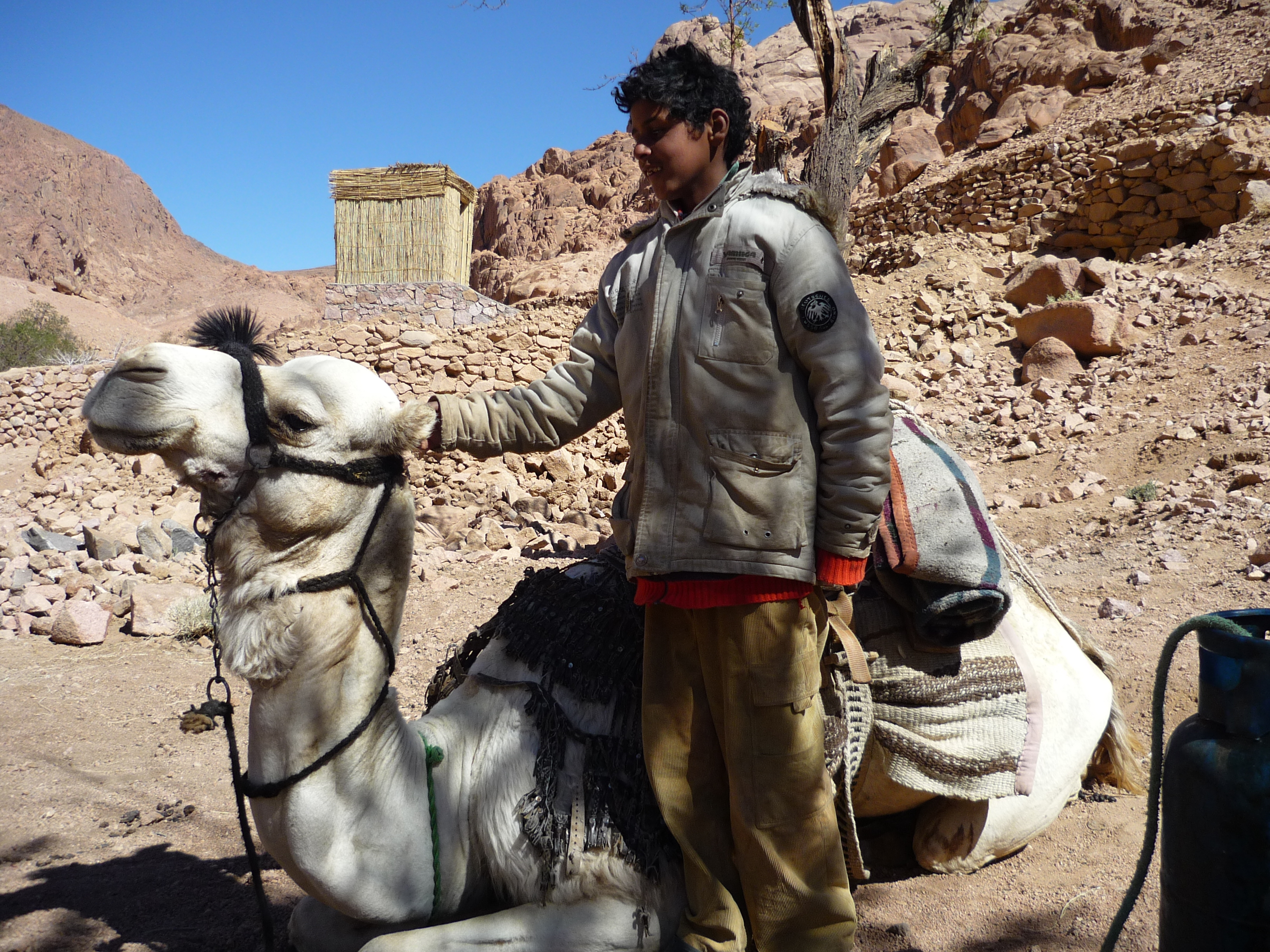
In addition to the help the working parties provide, they also bring extra income that can be seen as expedition costs.  All food is bought, transported by camel and cooked by Bedouin in the local economy providing paid work.  Cement for the dams has to be carried by camel (there are no roads in the mountains) so paying for transport helps the camel owners.  The garden owners where the guests stay are paid for the use of the garden too.

As a result of the working journeys, there are now 14 dams bringing more water to more gardens – maybe 10 to 20 gardens per dam which is 140 to 280 gardens benefiting  – up to 280 extended families – maybe over 1000 Bedouin.  Each garden is more productive growing plants and trees especially.  This locks up more carbon and could be seen as a direct carbon offset.

Besides these costs and effects there is also the cross-cultural benefit for both the traveller and host.  The traveller sees and experiences a way of life they haven’t experienced before.  They experience different morals and values, ways of behaviour, different religions, different climates, food landscapes etc.  All of this allows the traveller to

Desert taxis

Desert taxis

compare their own lives with others and to get a different perspective on their place in the world. They can see the richness of a tight-knit community even though there is huge poverty. They can see the value of place and heritage.  While the Bedouin are the classic nomads, there is a new breed of nomadic people now because in the west people do have not a connection to the land they live on or to the people they live next to.  They move frequently and don’t put down roots like they used to.  People in the west often don’t have the same connection with nature and the seasons or to the night sky in the way that traditional people do.  Experiencing this nature-rich way of life can bring a new dimension to the lives of the travellers. Maybe they will wake up to the state the world is in and feel sufficiently motivated to do something about it.

In summary, the alternative to foreign travel of restricting holidays to one’s home country only, in order to avoid flying, has some negative consequences. There is no easy answer to the dilemma of conscious travel and flying versus environmental damage, and as with most things this is a more complicated debate than it might seem at first.  Maybe it is best for each traveller to evaluate their journey against its true costs and benefits in a very conscious way before deciding whether to go or not.  And maybe we should not judge each other for the resulting decisions.

Posted in Makhad Trust | Tagged , , , , , , , , , , , | 18 Comments

Autumn – a time of reflection and preparation

Life sometimes feels as if a meandering stream has become a full flood river.  The Hopi Indians made a poem about this time and in it they say…

There is a river flowing now very fast.
It is so great and swift that there are those who will be afraid.
They will try to hold onto the shore.
They will feel they are being torn apart and they will suffer greatly.
Know the river has its destination.

The elders say we must let go of the shore, and push off and into the river, keep our eyes open, and our head above the water.
See who is in there with you and Celebrate.

After a summer spent living in a yurt at Green and Away, coming back to a house seems a strange and counter intuitive thing to do.  The thick walls drown out the noise of traffic but also of birdsong and the rustle of leaves on the trees.  The air seems stale and as if there is less of it.  It is more difficult to feel connected to nature, to the earth, its cycles and seasons when one spends nearly 22 hours a day inside.  Every year something inside rebels, and screams and demands change, but change to what?  Living in a yurt through the winter would be uncomfortable and impractical in this climate, as least for the Cranstons (there are plenty of people who do manage it).  Questions come up such as should we move house to somewhere nearer the countryside and nature, should I change jobs, how does one keep the continuity of connection with nature and at the same time do everything that needs to be done.

My work with Green and Away is a classic example of the trade-offs it is necessary to make to achieve some balance in life.  In order for the summer season to take place, a whole raft of administration has to be kept in order, bookings made with organisations and volunteers kept in contact (mostly by our wonderful volcos).  I took on most of those roles as coordinator and it is the price I pay for spending my summers outdoors.  Sometimes I daydream of working outside as a gardener or doing general labouring jobs but I know that is not what I will do – so there is a state of uncomfortable tension through the winter and into the spring.

As I write this, Hurricane Sandy is tearing its way across the east coast of USA in a massive show of climate change.  It is becoming ever more difficult for even the politicians to ignore the increasingly unstable climate and extreme weather conditions.  Human beings may already have set irreversible changes in motion with much worse to come, but we have to try harder to at least slow down the rate of global warming leading to climate change.  Many excellent people have been telling us how to do this for years but have mostly been ignored.  Now it is time for them to band together to make a bigger, more effective voice, one that will be listened too by everyone. Green and Away can play its part too, in promoting cooperation and bringing together the people who can make a difference in the world.  We have important work to do to get people back in touch with earth and reality.  That is the work for this winter and the spring, and ironically it will happen in a building!

We all need to connect with the beauty of nature as often as possible or we hide from the real world outside.  10 minutes appreciating trees is well spent.

It is worth reading Charles Secrett’s proposals at http://www.robertsbridgegroup.com/what-we-think/proactive/


Posted in Green and Away, inspiration | Tagged , , , , , , , | Leave a comment

There’s another dam in the Sinai Mountains

Completion of Gwoona Dam

Completion of Gwoona Dam

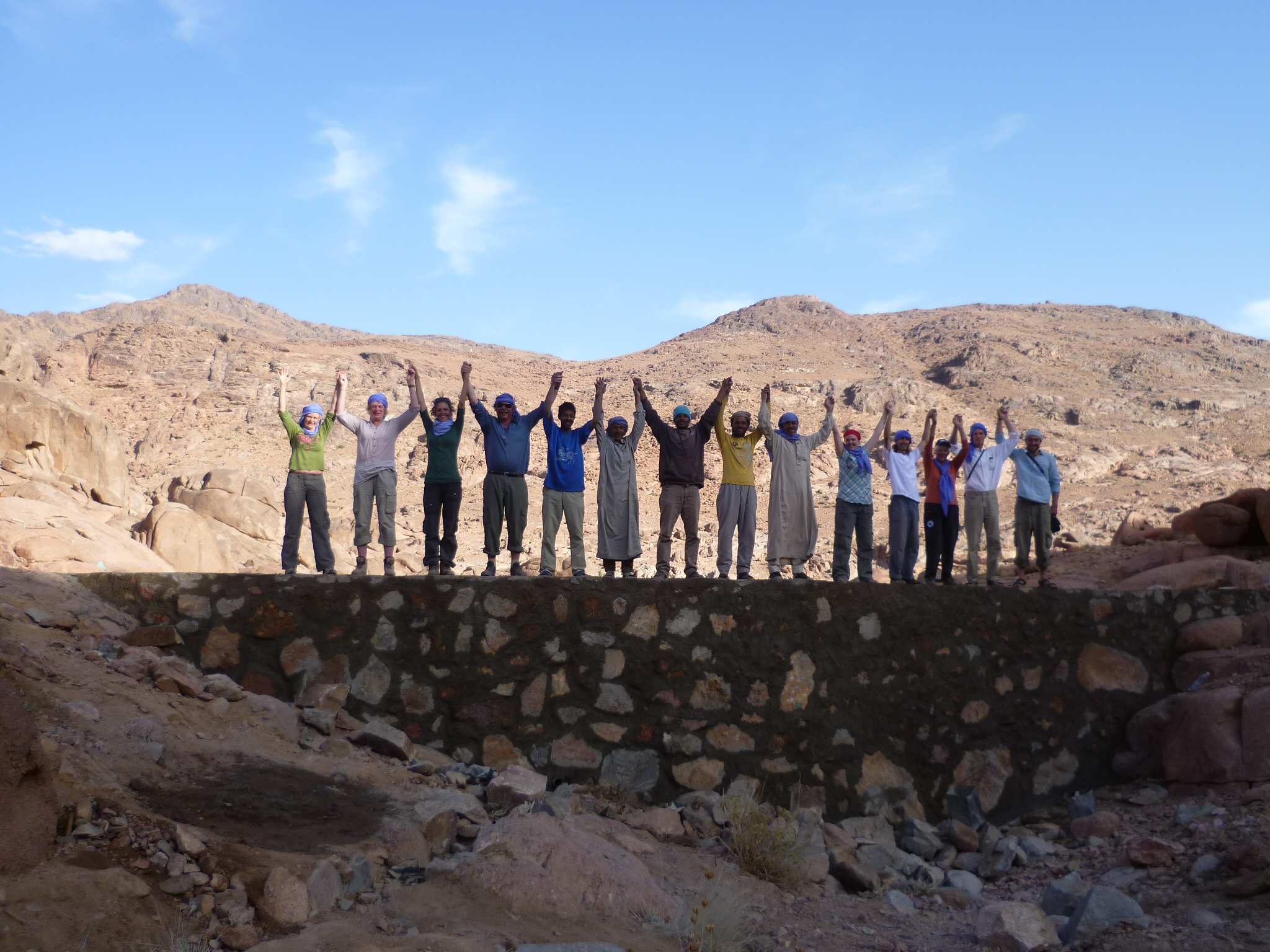
After a combined effort from 8 bedouin, 5 people from SKGR, 3 people from Green and Away and a Dutch lady, we finished Gwoona dam in 2014.  This dam will help bring water to many gardens down Wadi Gibal to Farsh Romana in the Sinai Mountains.

Here is the full report:

On 24 April, 7 participants from two organisations (SKGR – Self Knowledge, Global Responsibility http://www.selfknowledgeglobalresponsibility.org/ and Green and Away http://www.greenandaway.org/page.cfm?pageid=ga-home ) arrived in Sinai at the start of a journey to build Gwoona Dam.

The second day we left for St Katherine’s and the mountains, and were joined by Mirjam.  We had a wonderful trek up Wadi Tala, into Wadi Zuweitin for lunch, then up Wadi Gibal to Salem’s garden, our home for the next 5 nights.  We were looked after by Eid and Mohamed with some visits from Hussein who had family matters to attend to in St Katherine’s.  On the next day we joined the team of Bedouin builders, Saiyeed, Saiyeed, Mohamed, Salem, plus the cement boys, who had already been working for a week doing preparatory work.

We found that they had had to dig down over a metre to get to bedrock so there was a lot of work needed to get the dam up to the finished height. Over the next three days we worked hard and the final dam was 15.70 m long and 2.70 m high.  The dam was 1.20 m wide at the base and 1m wide at the top.  It has a volume of  31sq m.  The Bedouin estimate that the dam will hold 1700 cubic meters of water.

The money for the dam was raised by the participants through friends and supporters.  Such was the generosity of our sponsors that we exceeded the target of £2000 for the dam and raised enough funds for nearly ¾ of another dam.

The day after we finished the dam, we had a slow trek to Farsh Romana.  We were accompanied by Eid who was a brilliant guide and it was wonderful to have Mirjam with us as she was an excellent translator for the Bedouin stories that Eid was telling us.  We heard about how a ruined chapel became a focus for teenagers to meet and decide if they wanted to marry.  The girls would be herding the family’s goats over the mountains and often arranged to meet at the chapel to exchange news and see friends.  The boys got to hear about the meetings and would find themselves in the same area on the same day!  Although the boys and girls were not allowed to talk to each other they were able to flirt at a distance and look for a future husband or wife. This culminated in the drawing of the outline of their sandals on rocks.  If the pairing was approved by the girls’ family, her father would signal his approval by drawing a circle around the two sandals.  This led to discussions on love and marriage, conflicts in neighbouring countries and the need for world peace.

Eid also told us about the history of the Jebeliya tribe, the meanings of names of landscape features, the herbs they use and of his sadness and concern that this entire heritage would be lost.  None of his daughters have been up to the mountains gardens so they don’t know any of these stories and his sons only come up if they have work with tourists. It will only take a generation growing up in the towns for this history to fade, and with it the ability to live in the mountains and to keep the gardens going.  Eid, Hussein, Salam and Saiyeed are all custodians of a way of life that is disappearing and along with it traditional wisdom and living in harmony with nature. What could change this would be a revival of the trekking holidays and more journeys which would bring more of the Jebeliya back up into the mountains as guides and camel providers.  The dams and deepened wells are helping to keep the older generation connected to their heritage and make living in the mountains a possibility but the younger people need work in the mountains.

The following day we trekked down the mountains to have an excellent lunch at Fansina and to indulge in some essential shopping for beaded bags.  The minibus then took us out to Nawamis for the walk to Mattamir.  At this point we said a sad goodbye to Mirjam who had worked so hard on the dam and as translator.  We arrived to the magic of Mattamir just as the sun was going down.  The following day we had the usual desert orientation walk and a chance to choose a place for our mini 24 hour retreat.

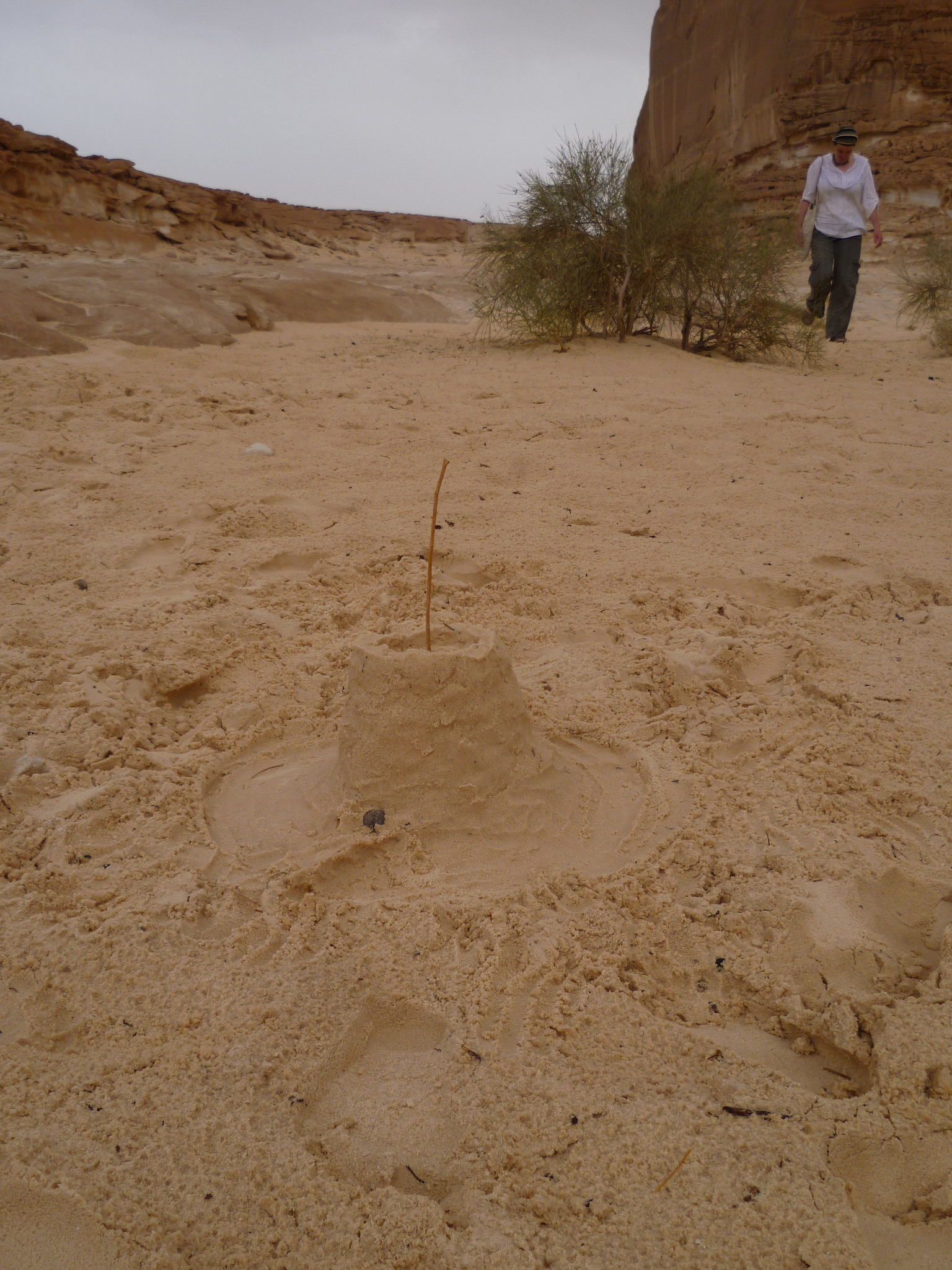
Just before we parted for the retreat there was the most unusual drama – thunder rolled over the mountains, the sky grew dark and then it rained! For 15 minutes or so there was heavy rain.  We quickly stowed away all our vulnerable belongings like sleeping bags under rocks and then tried to take refuge under the Bedouin tent.  However this leaked like a sieve and so we gave up taking shelter and stood out in the rain.  We could hear the

Desert Sancastle

Desert Sandcastle

sound of gushing water and saw a waterfall spewing off the top of a cliff below Gebal Mattamir.  It seemed really incongruous to see so many puddles and the wet sand.  It was even possible to make a sandcastle. Everything dried really quickly as the sun came out and went back to normal.  To our great disappointment we heard from Mahmoud that there hadn’t been any rain at all in the mountains and that the new dam was still dry.

For some the retreat was a welcome opportunity to have time in their busy lives to stop and do nothing for a day.  For others it was an opportunity to reflect on the path their lives were taking and to make decisions about the way forward.  We came together again on the last night for a delicious meal and to share our experiences over the previous 9 days.  Our last day was spent walking and camel riding to Gebel Maharoon and Aduda dune then down to the jeeps for the journey back to Sharm El Sheik.

The journey was very thought provoking and we learned a lot, some of it about the Bedouin cultural heritage and some things about ourselves. The contrast between our own lives back here in UK and Bedouin life helps put things in perspective and emphasise what is really important in life.  Our impact on the Bedouin is huge but this is a reciprocal experience with everyone concerned being enriched.

We would like to thank all our sponsors for their generosity.  The excess funds will be seed money for the next SKGR dam building trip scheduled for next spring.  Look out for more details to follow.

Posted in Green and Away, Makhad Trust | Tagged , , , , , , | 3 Comments

The power of not-doing

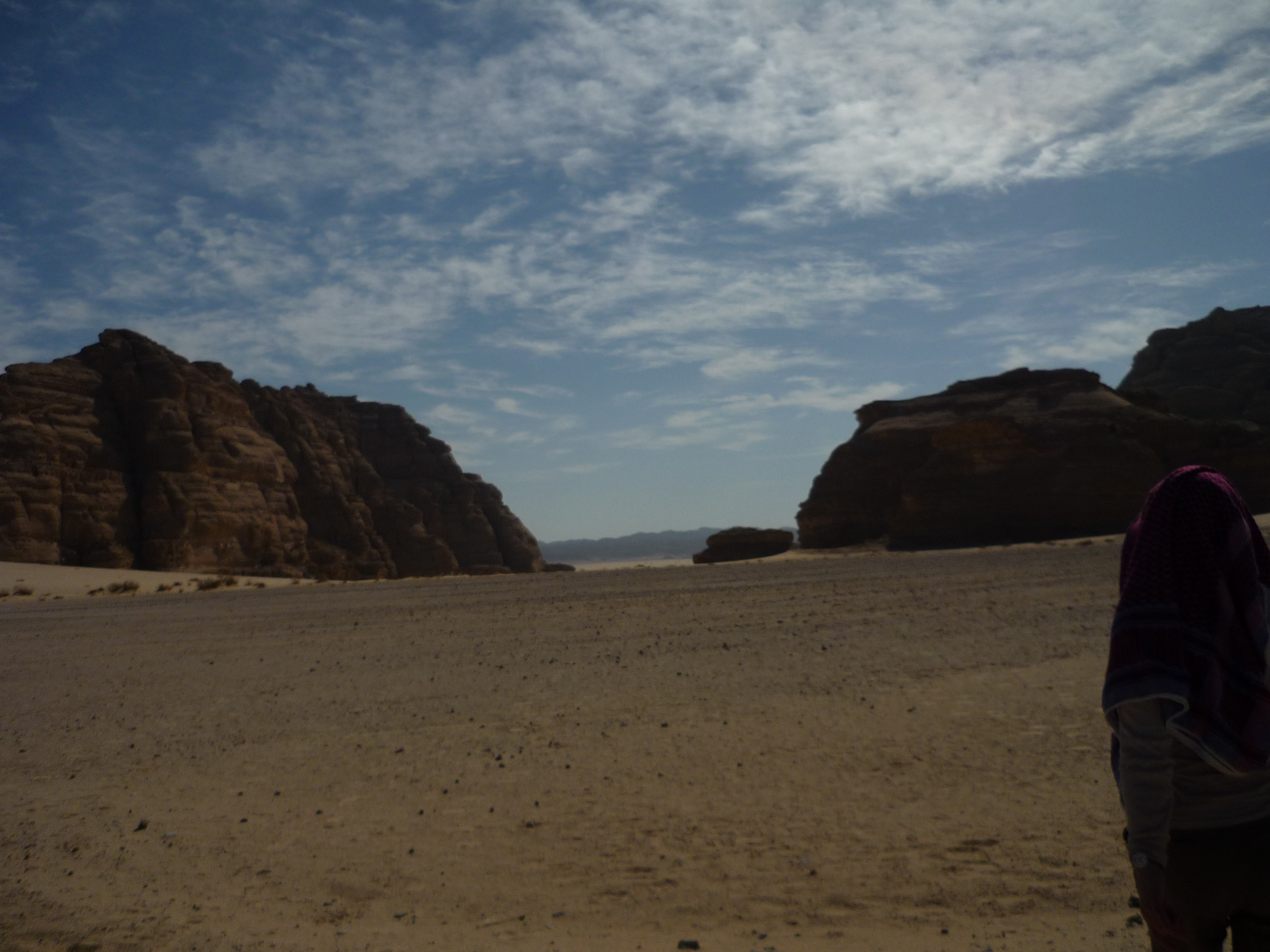
View from my place of retreat

My view of the world from my retreat place, looking towards the mountains of South Sinai, Egypt

This time next week I will be in Sinai leading a group to build Gwoona Dam and to go on a desert retreat.

Sometimes we need to get right away from all things familiar in order to find ourselves – to go to a place from where we can look objectively at our lives and at the world.  Such a place is often to be found in nature and in living simply without any of the benefits or distractions of modern technology.  Then we can listen deeply, to come to know who we are, and to see our place in the world.

The wild places of the world are ideal for this and in the UK we can go on retreats in places like the mountains and islands of Scotland.  But sometimes it is not enough to be silent in a familiar landscape or culture with its reminders and distractions, and then travelling to a place like Sinai, where people have been going to retreat for at least 2500 years, can allow us to connect with spirit more easily.  The three main prophets of the world’s religions all spent time wandering in the wilderness that is Sinai.

Here we come into contact with a land and culture vastly different from our own and with a people who are used to living in harmony with nature. Reflection on the contrast between the desert and our home environment can bring into sharp relief our usual disconnection from Nature, from spirit, and from ourselves.

At a recent talk, Satish Kumar said, “ A pilgrim celebrates life, places and people. Earth is a sacred place to cherish and to celebrate; it includes the wholeness of life.  To be a pilgrim needs a transformation of mindset so that we can see the beauty of the place we are in.  It is about adoration, celebration and gratitude for Earth.

A complainer is a tourist in the world.  Tourists are escaping from something. They are not interested in the place itself …people want the best hotel, the best food etc and they are disappointed as the reality never lives up to expectations.

For a pilgrim every moment is unfolding, emerging, and evolving.   Go into the unknown.  Don’t be fixed in mind or spirit.  Meet everyone for the first time each day, celebrate every day because when we celebrate we are a pilgrim.”

We can live life as a journey, or maybe as a dance, seeing where it will take us and who we will meet.  Then it becomes exciting and adventurous.  It may not always be safe but it won’t be boring and there is plenty of opportunity for challenges and growth.  Out of this inner journey we can bring out something to the outer world.  What is love for, if not to give to or to do something for others and to inspire others?

While living or being a pilgrim we can return the hospitality of generous hosts and give back to our communities.  We can offer gratitude, stories of travels and what we have learnt, maybe music or work.  Mother Teresa said do the small things with love – not the big things without.  And sometimes the power of not doing, of still time, is greater than that of doing.


Posted in Uncategorized | Tagged , , | 1 Comment

Inner Silence

Here are two poems that hint at inner silence and connection.  Enjoy…

Being-ness in Action

Realisation of past behavioural patterns,

Exposure of my weaknesses and blockages to life

Culminate in a spark of understanding.


Then comes the command to abandon any hope

And submit to life in all its riches.

With poem and verse drumming and tearing at my heart strings

I submit – and feel myself drowning in light.

A fire has been awakened in my heart

Fueled by the absence of hope.

I glow, – energised

And feel my body aching to dance – to the rhythm of life itself.

And joy – such exquisite emotion abounds –

I am full of supercharged emptiness,

A blank page, a clean slate –

Ready for life to write its next chapter on my soul.


Eternal Now

by Adyashanti

Take a moment to check and see if you are actually here

Before there is right and wrong

we are just here.

Before there is good or bad, or unworthy,

and before there is the sinner or saint,

we are just here.

Just meet here, where silence is

where the stillness inside dances.

Just here

before knowing something,

or not knowing.

Just meet here where all points of view merge into one

and the one point disappears

Just see if you can meet right now

where you touch the eternal

and feel the eternal living and dying at each moment.

Just to meet here

before you were an expert

before you were a beginner.

To just be here,

where you are what you always will be,

where you will never add anything to this, or subtract anything.

Meet me here where you want nothing

and where you are nothing.

The here that is unspeakable.

Where we meet only mystery to mystery

or we don’t meet at all.

Meet here where you find yourself

by not finding yourself.

In this place where quietness is deafening

and stillness moves too fast to catch it.

Meet here where you are what you want and you want what you are

and everything falls away into radiant emptiness

Posted in Uncategorized | Tagged , | Leave a comment

Musings on Leadership

Ever since I took on the role of co-ordinator of Green and Away, I have worried and agonised over my leadership style.  There are so many ways to lead, some good and some uphelpful and not every style is applicable to every situation whilst the ego just adds to the confusion by lapping up any kudos associated with the role.

Over recent years, and amongst the less structured, green organisations a different style has emerged that some have called flat management.  This is where there is no-one in overall charge and responsibility and management comes from a team of people.  This works very well for some organisations, especially where each member of the management team has a specific job and there is plenty of time to discuss each and every decision to get a concensus of opinion. The advantage is that it allows for creativity and innovation to arise and for everyone to contribute what they want. The disadvantage is that one needs a great deal more time to achieve the aims if they are realised at all.  This is directly opposite to the traditional way of one person taking overall responsibility and making nearly all the decisions. The advantage of this way is that it is strong and focused and the aim is very likely to be achieved but it can be stiffling of creativity and lessens feelings of ownership by the workforce.

In my opinion neither style would work well with Green and Away.  If we had the flat management style and long discussions about every issue we would never get the centre built, never mind being in a state to host conferences.  If we had the old strong tradition of leadership and I imposed my will on all aspects of the project, it is likely we would alienate or loose our volunteer work force.  The beauty of working with volunteers is that they force a different positive approach. They are our most valuble resource, but one that has the capacity to vote with their feet; if they are not happy then our resource is gone.  The balance between facitiating our aim of building and running G & A with keeping people working hard and enjoying it, is a difficult one.

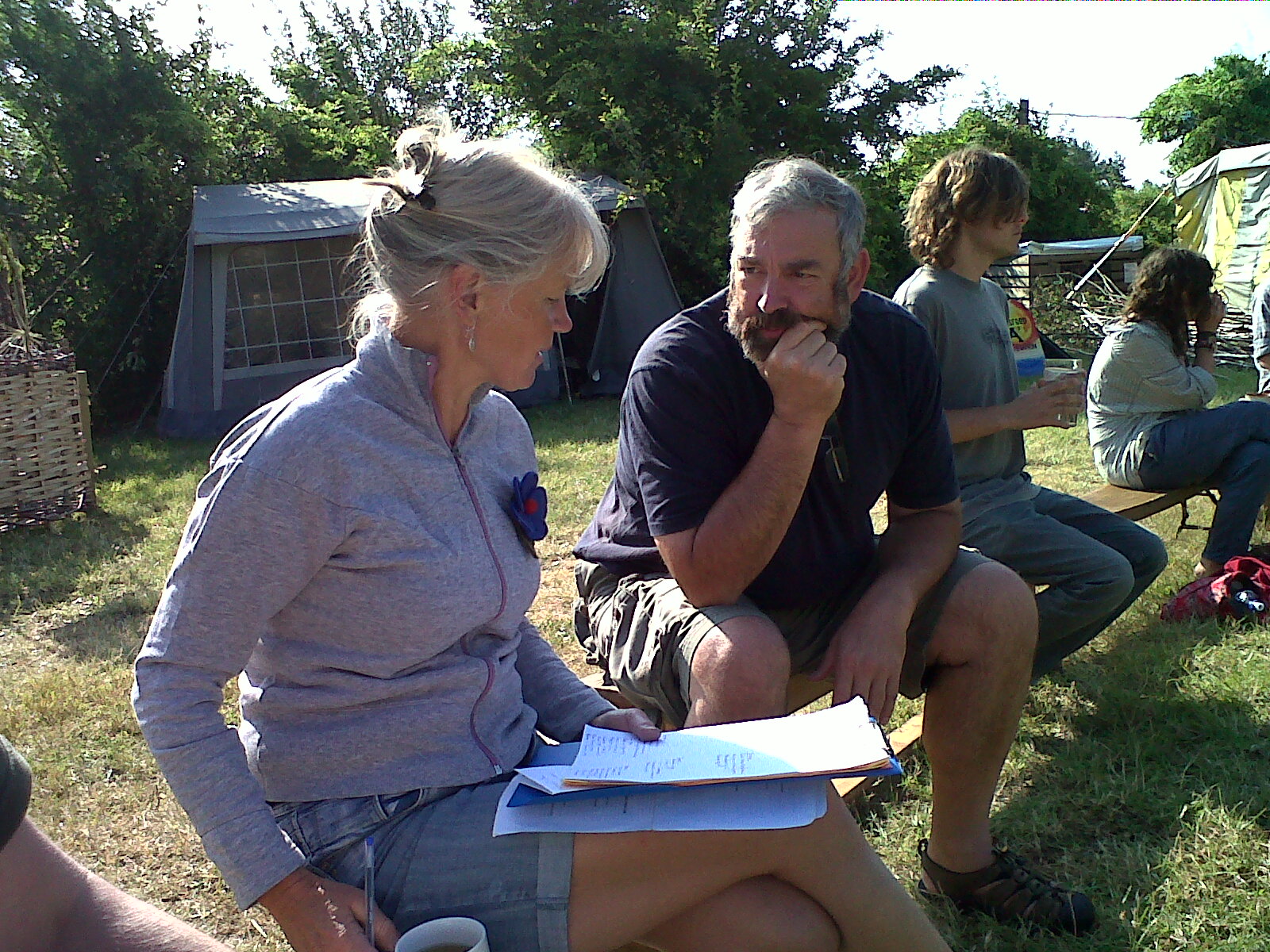
So far I have led by gut instinct but not always trusted it.  Last weekend we had a social gathering of volunteers and trustees.  Rather than tell everyone what to do, I stepped back to see what would happen with minimal coordination.  We got through the weekend fine but time was wasted in working out what walks to do and waiting for people who did not know they were being waited for.  Meals were cooked and dishes were done but some people did more than their fair share while others contributed rather less.  There was less focus and less to do.  I think the weekend was a good experience for most people but it could have run rather more smoothly with more direction.  None of this mattered for an informal gathering but during our set up phase, when there is a whole conference centre to build in 12 days we have to have more focus.

The answer to what style of leadership suits Green and Away best is one that is firm and focused yet soft and adaptive depending on the situation. It needs to be both soft in an adaptive, yeilding way to encourage creativity, but firm of boundaries and to keep the focus on the aim.  To achieve this requires constant vigilence and always keeping a balance between the best interests of the organisation as whole with the needs of of the workforce.

Fortunately I am supported by a wonderful bunch of people who make up the Trustee body and who have responsiblity for various departments.  Out of season we have the time to talk through all the various decisions to reach agreement on the way forward and my job then is to impliment those decisions once on site.  It is a way of working that has evolved over 20 years and one that seems to work very well.

Meanwhile I will now trust to my gut instinct that has served me so well so far.

Preparing for the morning briefing

Posted in Uncategorized | Tagged | Leave a comment

Winter Stillness

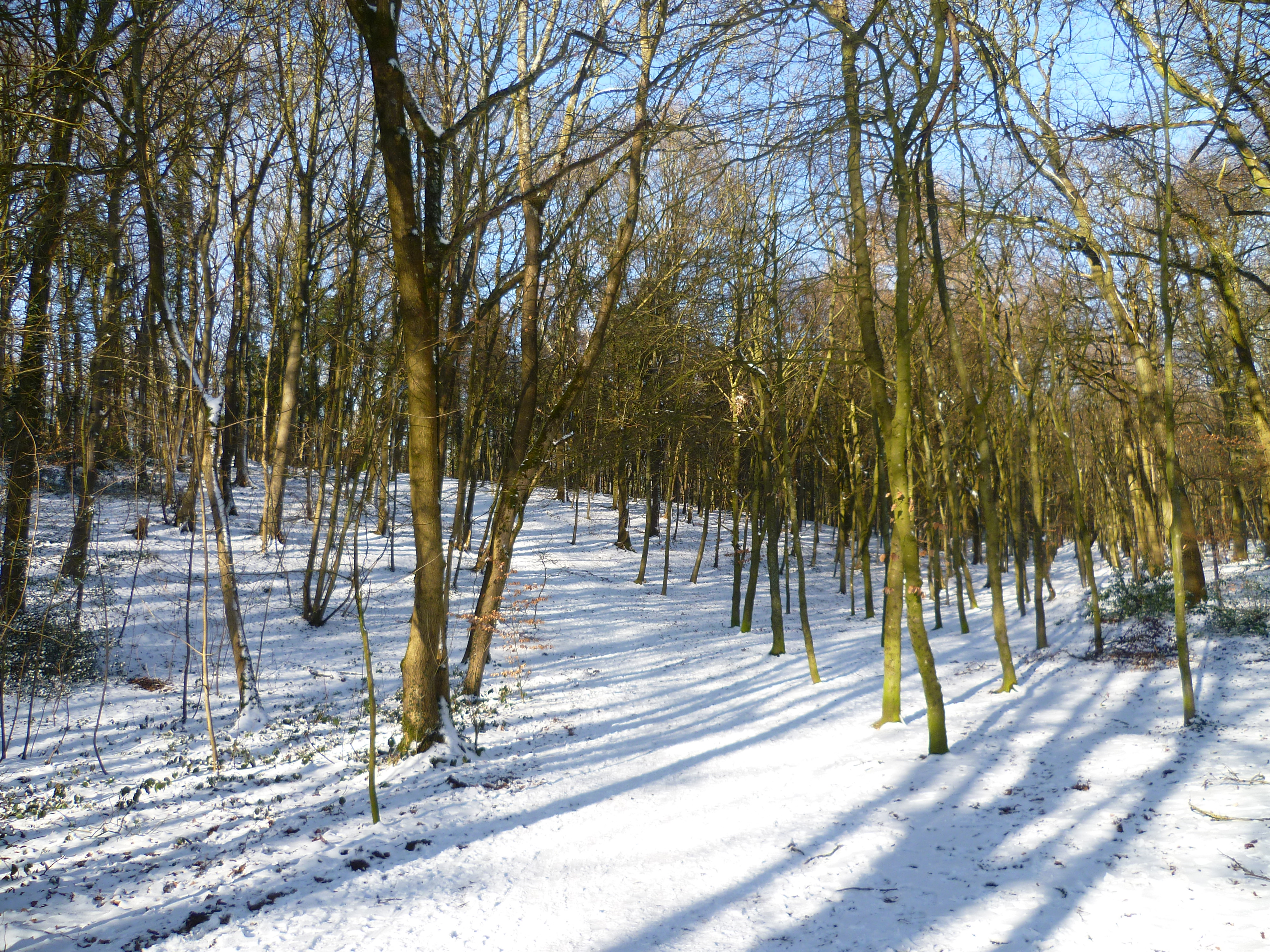
Two days ago I went for a walk in Randwick Woods near my home.  There had been snow two days before but now there was bright blue sky and cold still air.  The snow had melted a little and then frozen again and there was a top layer of crunchy ice.  The woods had a wonderful quality of stillness and silence – there is something about snow on the ground on a calm day that seems to magnify the absence of sound.  In the stillness, it is as if everything is more real, more alive, and the space between things is thicker and richer.  When nature is more alive, I feel more alive too, and more in the moment.

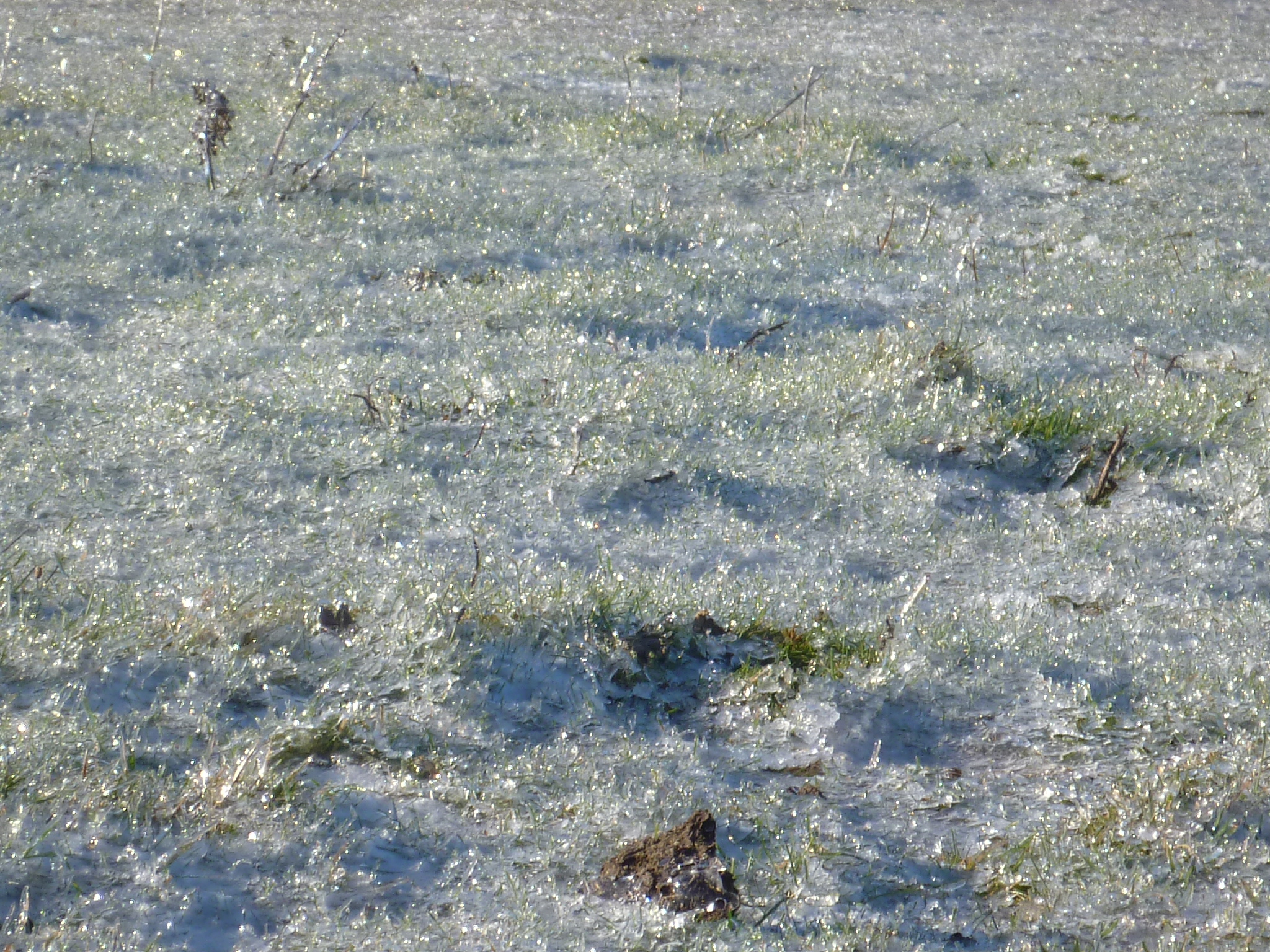
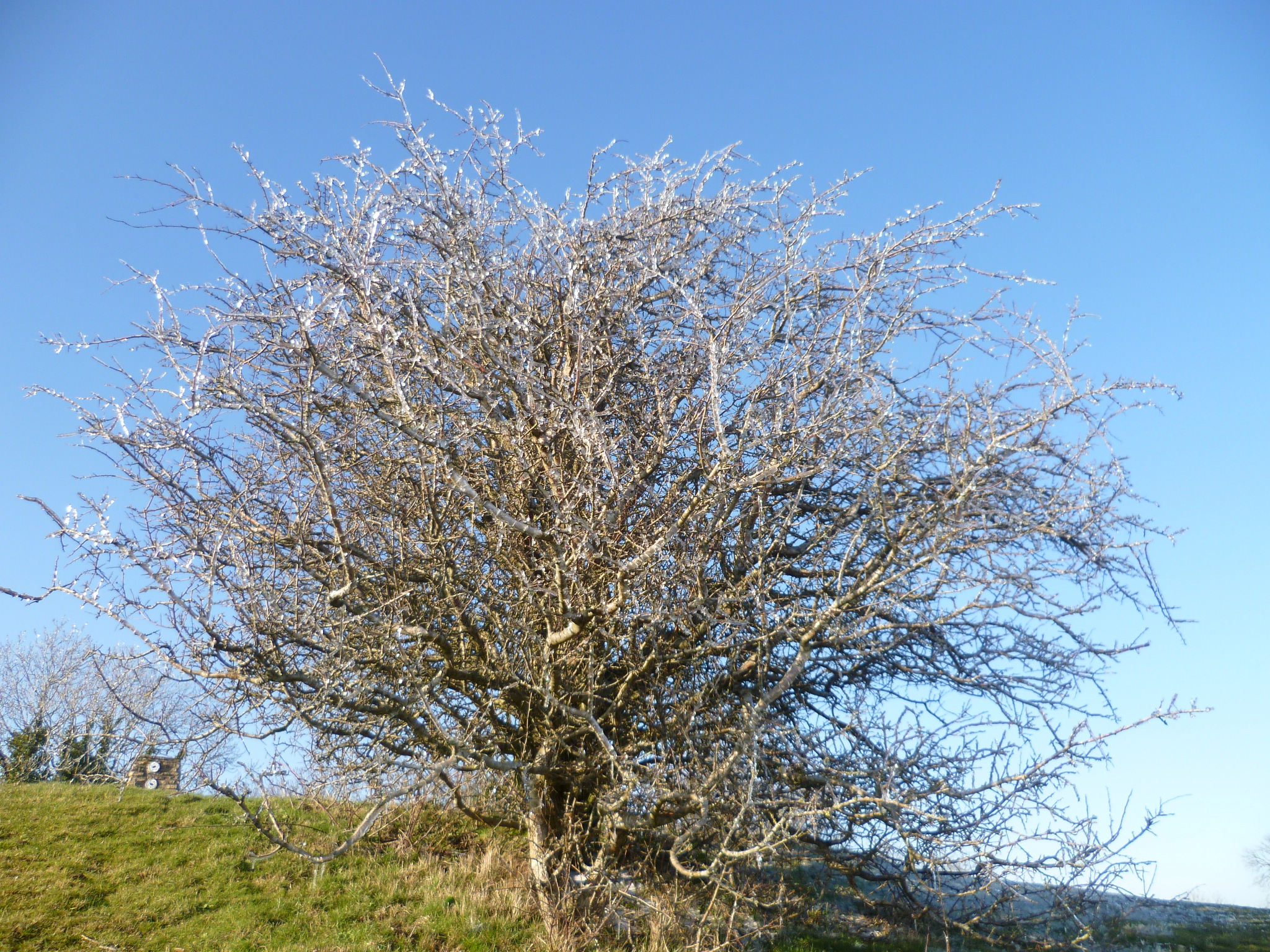
Further on, on a promentary of land where the sun and winds had been strong,  most of the snow had melted and then frozen again.  Bushes and grass were covered in twinkly, rainbow icicles, glistening in the sun.  Such moments as these are fleeting and rare and all the more precious.  I took some photographs but it is hard to capture the magic of the reflecting ice.  What a beautiful day…

Posted in Uncategorized | Tagged | Leave a comment

Courage to make a difference

In a recent blog, I mentioned three women who inspired me, Poly Higgins, Clare Dakin and Scilla Elworthy. However they are not the only women who have given me a longing to make a difference to the world.

Jay Griffiths has written  a book called Wild that is one of the most influential books I have read and I can’t recommend it highly enough though it is a difficult read at times. Jay has travelled the world meeting indigenous people’s and living in harmony with the Earth, experiencing the beauty and fragility of life as well as the ugly desecration of nature by corporate greed.  Her writing is powerful, potent and hard-hitting as well as poetic and inspirational.  Underlying her story telling is a courage to go to extremely remote wild places on her own, facing challenging climates and people.  What comes through is her capacity and willingness to show her vulnerability.  Without the ability to listen and be vulnerable she wouldn’t have earned the trust of many of the people she writes about, nor would she have seen all nature’s beauty as it is only when we are open-hearted that we are connected enough to really feel the intense, achingly beautiful and painful sights of the world.  And behind all this is a passion for life in all its wildness.  Her book has the potential to make a difference to those who read it and possibly to those she has written about.

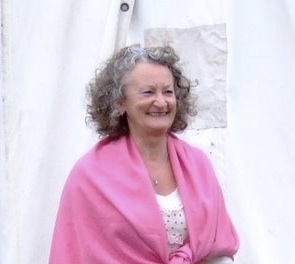
Another woman who is making a difference is Jenny Jones, Green councillor on the GLA.  Jenny was elected in 200 and has worked with both Ken Livingstone and Boris Johnson.  Although the greens are a minority party in terms of representation on the council, their influence has been disproportionately large.  Jenny has sat on a wide range of committees such as Metropolitan Police Committee and the Firebrigade  as well as London Food.  In all her work she champions the cause of green issues. In the previous Mayoral administration she was the Mayor’s Green Transport Advisor, advising him on sustainable forms of transport. She was also Chair of London Food, a Mayoral body looking at ways of giving Londoners fresher, healthier and more affordable food while minimising its environmental impact.  Jenny is changing public perceptions in London to seeing that sustainability makes a positive impact on people’s lives as well as being better for the planet.  Jenny is standing for mayor in the elections this Spring against the usual strong opposition of the main political parties.  The fact that she is unlikely to win the election is not a reason to give up on supporting Jenny.  The more votes she gets the more the Green Party has to be taken seriously.  I don’t live in London but I would urge any London voter with a Green conscience to vote for her. Jenny spent a year as Deputy Mayor to Ken and could fulfill the role again in the future, bringing more sustainable policies into action.  Jenny has great passion, wisdom and integrity and we desperately need more politicians like her.

Behind these inspiring women are not only motivational hopes and dreams of a better world, but courage to stand up in front of people and say ‘this is what we must do’.  They have the courage to take action and carry out their intentions despite hardship, failure and derision.  At a time when we badly need more people doing this, I wonder what stops me and others from doing the same. There is courage in everyone’s heart if we look.

Twenty years from now you will be more disappointed by the things that you didn’t do than by the ones you did do. So throw off the bowlines. Sail away from the safe harbor. Catch the trade winds in your sails. Explore. Dream. Discover.


Mark Twain

“Come to the edge.”
“We can’t. We’re afraid.”
“Come to the edge.”
“We can’t. We will fall!”
“Come to the edge.”
And they came.
And he pushed them. 

And they flew.

Guillaume Apollinaire,   1880-1918
And the day came when the risk it took to remain tight inside the bud was more painful than the risk it took to blossom.   

Anais Nin

There are many more quotes like these on Inspiration Peak Have a look and be inspired

Posted in General, inspiration | Tagged , , , | Leave a comment